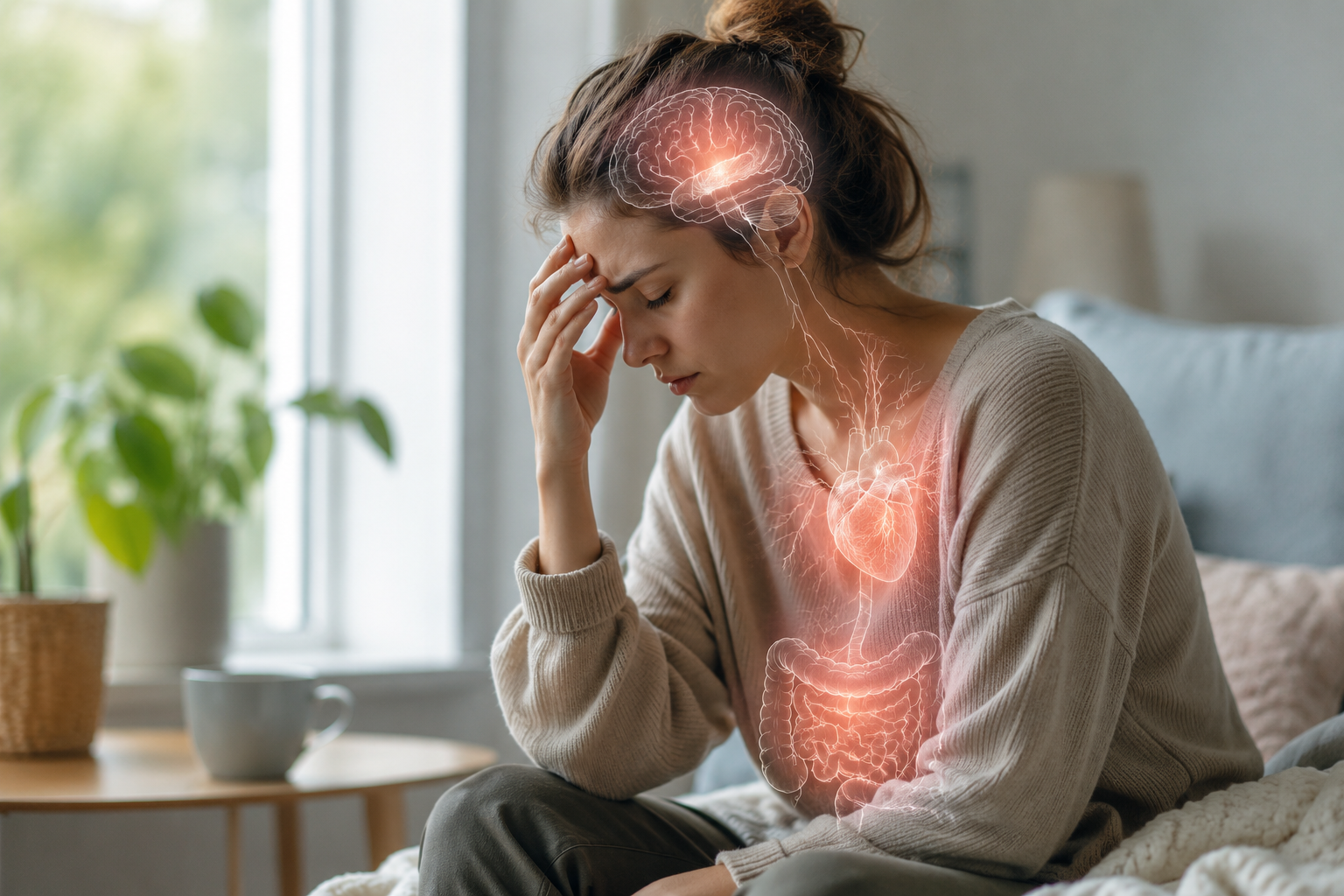
When people think about anxiety, they often picture someone who worries constantly or feels overwhelmed by stressful situations. While excessive worry is certainly a common symptom, anxiety affects much more than your thoughts.
In fact, anxiety often shows up in the body before people even realize they're anxious.
You may notice a racing heart before a presentation, tight shoulders after a difficult conversation, or stomach pain before an important event. Sometimes these physical symptoms become so noticeable that people wonder if they have a medical condition rather than anxiety.
At Guidepost Mental Health Counseling, we regularly work with individuals across New York who are surprised to learn that many of the physical symptoms they've been experiencing are connected to anxiety. Understanding this mind-body connection is often the first step toward feeling better.
In this guide, we'll explore how anxiety affects the body, why these symptoms happen, and practical strategies that can help you feel calmer and more in control.
Anxiety Is a Whole-Body Experience
Your brain and body are constantly communicating with one another.
When your brain perceives a threat, whether it's a real danger or simply a stressful situation, it activates your body's stress response. This is commonly known as the "fight, flight, or freeze" response.
Thousands of years ago, this response helped humans survive dangerous situations. If our ancestors encountered a wild animal, their bodies needed to react immediately. Their heart rate increased, muscles tensed, breathing became faster, and energy was redirected toward survival.
The problem is that your brain doesn't always distinguish between physical danger and emotional stress.
Today, a difficult meeting, financial worries, relationship conflict, or ongoing anxiety can trigger the same physical response.
If these situations happen frequently, your body may spend much of its time in a heightened state of alertness, leading to persistent physical symptoms.
Why Physical Symptoms Can Feel So Frightening
Many people become even more anxious because of the physical symptoms themselves.
For example, a racing heart may lead someone to wonder if they're having a heart problem. Dizziness might make them fear they're about to faint. Chest tightness can feel so intense that some people visit the emergency room believing they're having a heart attack.
While it's always important to rule out medical concerns with a healthcare provider, many people discover that their symptoms are actually related to anxiety.
Understanding what's happening inside your body can reduce fear and help you respond more effectively.
A Racing Heart
One of the most common physical symptoms of anxiety is a faster heartbeat.
When your nervous system senses danger, it pumps more blood to your muscles so you're prepared to respond quickly.
Even if you're simply sitting at your desk worrying about tomorrow's meeting, your body may react as though you're facing a physical threat.
Some people notice:
Heart palpitations
A pounding heartbeat
Feeling their pulse throughout their body
These sensations can be uncomfortable, but they're a normal part of the body's stress response.
Tightness in Your Chest
Chest tightness is another symptom that often causes concern.
When anxiety increases, muscles throughout your body become tense, including those around your chest and rib cage.
You may feel:
Pressure in your chest
Difficulty taking a deep breath
A sensation of heaviness
Mild discomfort when breathing
These feelings can be alarming, especially if you've never experienced them before.
If chest pain is severe, sudden, or accompanied by symptoms that concern you, it's always important to seek medical attention to rule out other conditions.
Muscle Tension and Aches
Have you ever realized your shoulders were up near your ears after a stressful day?
Muscle tension is one of anxiety's most common physical effects.
Many people unknowingly tighten their:
Neck
Shoulders
Jaw
Back
Hands
Over time, constant muscle tension can lead to headaches, soreness, jaw pain, and chronic discomfort.
Some people don't even realize how tense they are until they consciously relax their muscles.
Headaches
Stress-related headaches often develop because of ongoing muscle tension.
Tight muscles around the neck, shoulders, and scalp can contribute to tension headaches that come and go throughout the week.
If anxiety is persistent, these headaches may become more frequent.
While headaches can have many causes, chronic stress is a significant contributor for many people.
Stomach Problems and Digestive Changes
Your digestive system is closely connected to your brain.
In fact, the gut is sometimes called the "second brain" because of the strong communication between the digestive system and the nervous system.
When anxiety increases, you may experience:
Stomachaches
Nausea
Loss of appetite
Increased appetite
Diarrhea
Constipation
Bloating
Many people notice digestive symptoms before stressful events, such as job interviews, public speaking, or important conversations.
This is a normal response to stress, although ongoing digestive issues should also be discussed with your healthcare provider.
Trouble Sleeping
Anxiety rarely stays awake only during the day.
Many people find that bedtime is when their thoughts become loudest.
Instead of relaxing, the mind begins reviewing the day's events, planning for tomorrow, or imagining worst-case scenarios.
This can make it difficult to:
Fall asleep
Stay asleep
Feel rested in the morning
Poor sleep then increases anxiety the following day, creating a cycle that's difficult to break.
Fatigue That Doesn't Go Away
Living with anxiety is mentally and physically exhausting.
Your body uses significant energy remaining in a constant state of alertness.
Even if you sleep for eight hours, you may still wake up feeling tired.
Many people describe anxiety as feeling like they're carrying an invisible weight throughout the day.
This exhaustion isn't laziness. It's the result of your nervous system working overtime.
Dizziness or Feeling Lightheaded
When anxiety causes rapid breathing, the balance of oxygen and carbon dioxide in your body changes temporarily.
This can create sensations such as:
Dizziness
Lightheadedness
Feeling disconnected
Feeling unsteady
While these symptoms are often related to anxiety, they should always be evaluated by a healthcare provider if they're new, severe, or persistent.
Why These Symptoms Continue
Many people expect anxiety symptoms to disappear once a stressful situation ends.
Sometimes they do.
However, if anxiety becomes chronic, the nervous system may stay activated long after the original stressor has passed.
Your body essentially becomes accustomed to staying alert.
This is why someone may continue experiencing physical symptoms even during relatively calm periods.
The nervous system needs time, consistency, and healthy coping strategies to learn that it's safe to relax again.
Breaking the Cycle
One of the challenges with anxiety is that physical symptoms often create additional worry.
For example:
You notice your heart racing.
You begin worrying something is wrong.
Your anxiety increases.
Your heart races even faster.
This creates a cycle where anxiety feeds the physical symptoms, and the physical symptoms feed anxiety.
Learning to interrupt this cycle is an important part of recovery.
What You Can Do About It
Although anxiety can feel overwhelming, there are effective ways to reduce both the emotional and physical symptoms.
Learn to Recognize Your Triggers
Start paying attention to situations that increase your physical symptoms.
Ask yourself:
What happened just before I noticed this?
What was I thinking?
Was I under pressure?
Was I avoiding something difficult?
Recognizing patterns helps you understand your anxiety rather than fear it.
Practice Slow, Controlled Breathing
When we're anxious, breathing often becomes quick and shallow.
Slow breathing sends a message to the nervous system that you're safe.
Try inhaling slowly through your nose for four seconds, holding briefly, then exhaling gently through your mouth for six seconds.
Repeating this for several minutes can help calm both your body and mind.
Move Your Body
Physical activity helps your body process stress hormones more effectively.
You don't need an intense workout.
Even a short walk, stretching session, or gentle yoga can reduce muscle tension and improve mood.
Movement also reminds your nervous system that it doesn't need to stay stuck in survival mode.
Reduce Caffeine When Possible
Caffeine stimulates the nervous system.
For people already experiencing anxiety, large amounts of caffeine can increase symptoms such as:
Racing heart
Restlessness
Jitters
Difficulty sleeping
You don't necessarily need to eliminate caffeine completely, but paying attention to how it affects your body can be helpful.
Prioritize Quality Sleep
Good sleep supports emotional regulation and nervous system recovery.
Creating a consistent bedtime routine, limiting screens before bed, and giving yourself time to unwind can make a significant difference.
Small improvements in sleep often lead to noticeable improvements in anxiety.
Challenge Anxious Thoughts
Anxiety often convinces us that every uncomfortable sensation is dangerous.
Instead of immediately assuming the worst, ask yourself:
"Could this be anxiety?"
"What evidence do I have?"
"Have I experienced this before?"
This doesn't mean ignoring medical concerns. It simply means recognizing that anxiety is often a possible explanation for physical symptoms.
Consider Professional Support
If anxiety is affecting your daily life, relationships, work, or physical wellbeing, therapy can help.
Working with a therapist allows you to better understand the connection between your thoughts, emotions, and physical symptoms.
Therapy can help you:
Identify anxiety triggers
Learn healthier coping strategies
Reduce physical symptoms
Build confidence in managing stressful situations
Feel calmer without relying solely on avoidance
At Guidepost Mental Health Counseling, we provide virtual therapy throughout New York for individuals experiencing anxiety, stress, and other emotional challenges.
When Should You See a Doctor?
While anxiety commonly causes physical symptoms, it's important not to assume every symptom is anxiety.
If you experience:
New or severe chest pain
Difficulty breathing
Fainting
Persistent dizziness
Significant or unexplained physical changes
it's important to seek medical evaluation.
Many people find reassurance after learning their symptoms are not related to a medical condition, making it easier to address the anxiety itself.
Final Thoughts
Anxiety is much more than worry.
It affects the entire body, influencing your heart, muscles, breathing, digestion, sleep, and energy levels. These symptoms can feel frightening, especially when you don't realize anxiety is playing a role.
The encouraging news is that anxiety is highly treatable.
Understanding what's happening inside your body is the first step toward breaking the cycle. With healthy coping strategies, self-awareness, and professional support when needed, it's possible to reduce both the emotional and physical effects of anxiety.
If you've been experiencing unexplained physical symptoms alongside ongoing stress or worry, you don't have to manage them alone.
With the right support, you can learn to calm both your mind and your body, allowing you to feel more present, confident, and in control again.
